Colonial History of Guatemala

Spanish Colonization Antigua Colonial Towns New World Conquistadores Mayan Tribes Alliances Cultural Fusion
Colonial History of Guatemala
Guatemala is a living testament to cultural blending. In the 16th century, the Spanish colonized the Americas. This brought about drastic changes to the local cultural groups and their way of life. However, even before the Spanish established their colony, the people of Guatemala had already developed quite a bit. By the time the Spanish discovered this part of the continent, most of the major Mayan cities had been abandoned, and the remaining native tribes were constantly at war. This was nothing new for the Maya, and it was probably an advantage for the Spanish!
Historical Facts About the Colonization in Guatemala
In 1524, Pedro de Alvarado discovered an intriguing civilization nestled in the mountains of Guatemala. Unlike the Aztecs, the Maya were not unified as an empire. They were organized into different city-states, which hindered the colonization process. However, Alvarado and his small army were well-armed with weapons unknown to the Maya: fire guns, metal swords, and horses.
With the help of their Mexican allies, the Spanish crossed ravines and dense forests until they encountered the first Maya tribe, the K’iche, in Quetzaltenango. The Maya put up a strong resistance, which led to a brutal fight. Ultimately, Alvarado betrayed the K’iche lords and burned them to death. This tragic event caused the K’iche kingdom to surrender, allowing the Spanish to continue their journey of colonization.
They encountered another Mayan tribe, the Kaqchikel, in Tecpán at that time. However, their approach to this native group was quite different. The new tribe sided with the Spanish, allowing them to establish a base in their capital, Iximché. The Kaqchikel offered to help the Spanish defeat the remaining K’iche soldiers and their main enemies, the Tz’utujil, in the Lake Atitlán region. However, the alliance didn't last long, and the foreign troops were forced to settle elsewhere.
The Spanish did not firmly establish themselves in Guatemala until 1527. They built their first colonial city, which is now known as Ciudad Vieja. The capital began to acquire Spanish characteristics in its structures and became a base for manufacturers of arms. However, their achievements did not last long. Located on the foothills of the majestic Agua Volcano, Ciudad Vieja was not the safest spot. Eleven years after the European colonists settled there, a destructive mudslide swamped the young capital city.
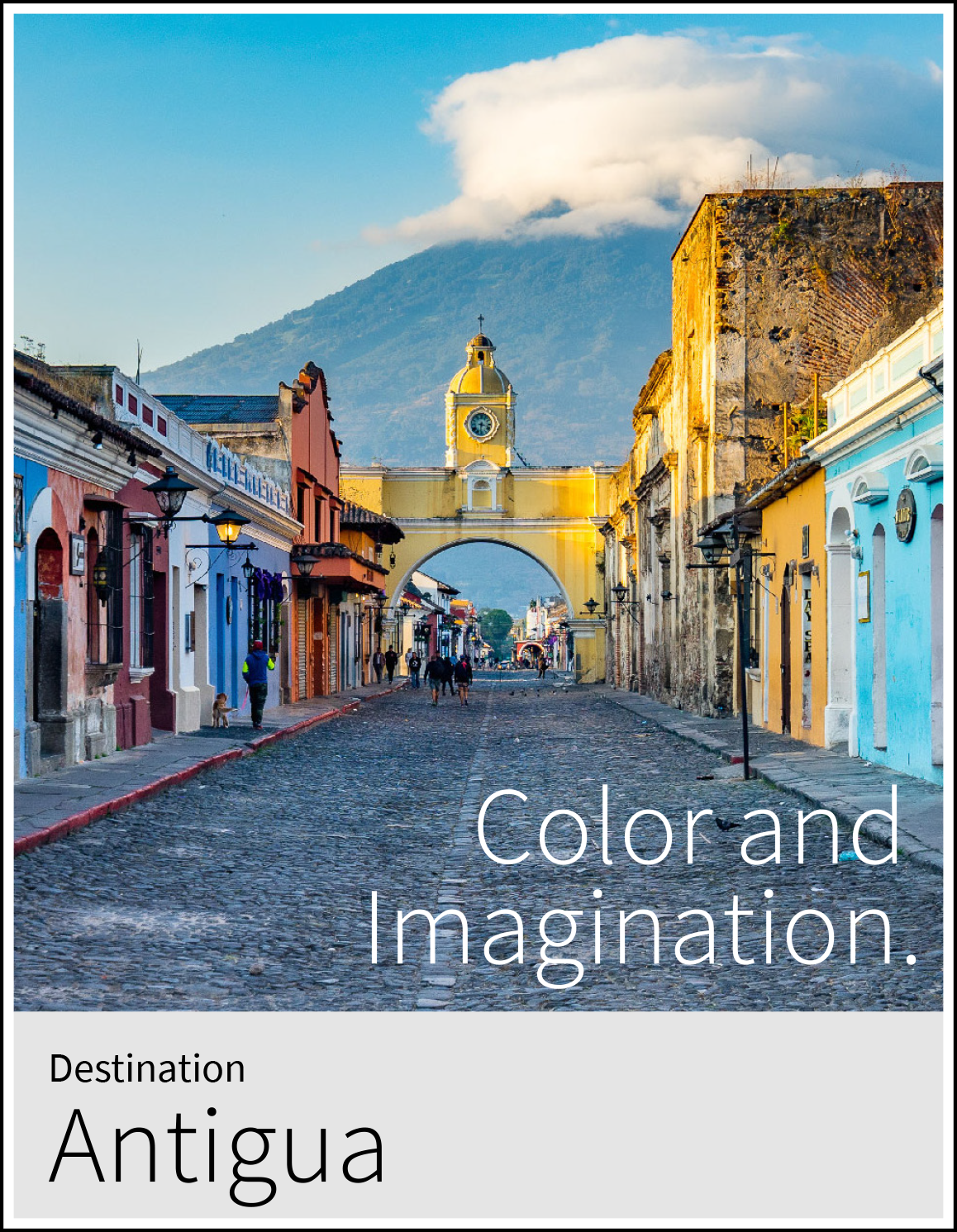
The survivors were forced to find a safer place. In 1543, they discovered Panchoy Valley, which is now known as Antigua Guatemala. Attracted by the valley's fertile land and beautiful landscapes, the Spanish were convinced that it was the perfect place to rebuild their capital city. They imposed a strong, Baroque-influenced architectural style, and the Catholic Church became prevalent. Antigua served as one of the most important Spanish colonies for more than 200 years, while the Mayan culture simultaneously began to fade away.
Later, in 1773, the former capital survived several tremors before being hit by a strong earthquake that destroyed buildings and killed hundreds. This devastating event left the city in ruins, forcing the population to relocate once again. Three years later, the capital moved to the Valley of the Ermita, which is now Guatemala City.
Exploring Guatemala is like traveling back in time. The Spanish colonization left a strong mark on the country, both culturally and physically. Baroque-style churches, thick walls, cobblestone streets, and fountains are among the colonial-era structures that can still be found there.
From its outstanding architecture to its beautiful natural surroundings, experience the splendors of Guatemala, a hidden treasure in Central America.